Pastor, here’s the 3-layer team structure that carried us to 4,000.

Most churches don’t have volunteer teams. They have volunteer lists — Billy Bob does this, Susie does that — one flat layer of doers, all reporting to an exhausted staff member or to you. That structure has a ceiling, and you’ve probably already hit it. Here’s the three-layer structure we’ve run at Hope City from the beginning, and why I believe it’s a big part of how we grew to 4,000 in under four years.
Step 1 — Draw the tree before you recruit another person
Recruiting into a flat structure is pouring water into a cup that’s already full. Before you make one more ask, sit down and draw your leadership tree: every ministry, three layers deep. How many people does each area actually need if you’re serious about serve-one-worship-one? Where are the empty boxes? Most pastors have never drawn this once — and the picture changes how you see every person in your church.
Step 2 — Define the three layers for every ministry
Volunteers are the doers — teaching the fourth graders, making the coffee, greeting at the door. Coordinators don’t do the doing: they serve the doers. In kids ministry ours walk the hall — “what do you need? is anything going on?” — essentially staff on site, without ever being assigned a room. Team leaders own a whole area, with coordinators and volunteers under them.
Even our coffee runs this way: a team leader over the area, coordinators over the brewing, volunteers at the stations. Every ministry defines the layers for its own context — production’s tree looks nothing like the nursery’s — but every ministry has all three. And notice what you just built: a staff pipeline. When we hire, we’re usually hiring someone the tree already developed.
Step 3 — Spot leaders with small opportunities
How do you know who belongs in the coordinator and team-leader boxes? You give people small opportunities and watch. Somebody handles a little responsibility with excellence — that’s your signal. Marketplace success translates more often than not: the woman who runs a sales region can run your first-impressions team.
And when someone is in the wrong seat — the doer sitting in a multiplication seat, the department that never grows — you move them in genuine love. Show them where they’ll thrive: “based on what you do so well, you’re going to flourish over here.” You’re not taking something from them; you’re repositioning them to succeed. One practical warning from experience: identify who fills their seat before you move them.
Step 4 — Delegate like an equipper, not a dumper
The tree only works if you actually give the ministry away — and there’s a right and a wrong way. Delegation is responsibility plus equipping plus clear expectations. Do all three and people feel valued; responsibility done right is an honor. Skip the equipping and the clarity, and the same delegation feels like being dumped on — and dumped-on volunteers quit.
I tell our staff constantly: I didn’t hire you to do the ministry. I hired you to equip our people to do it. If you’re a solo pastor, the same sentence applies to your key volunteer leaders — they don’t need to be doers, they need to become equippers.
Step 5 — Find the leadership gifting you can’t see
Some of your best future team leaders have never raised a hand, so gut instinct alone will miss them. The Spiritual Gifts module runs a gifts + DISC assessment across your whole congregation — and the results surface exactly what this structure needs: who has the leadership gift, who has the driver personality that multiplies others, who’s wired to coordinate. Your empty tree boxes get a matching list of names.
Book a 20-minute demo and the team will run the full assessment on your staff at no cost — you’ll see the leadership signals on people you already know.
Draw the tree. Define the layers. Spot the leaders. Give it away like an equipper. If you want the full teaching — including how this structure answers the growth questions pastors send me — it’s all in my free Church Teams webinar.
— Volunteers are the lifeblood of your church.
The Church Teams Webinar
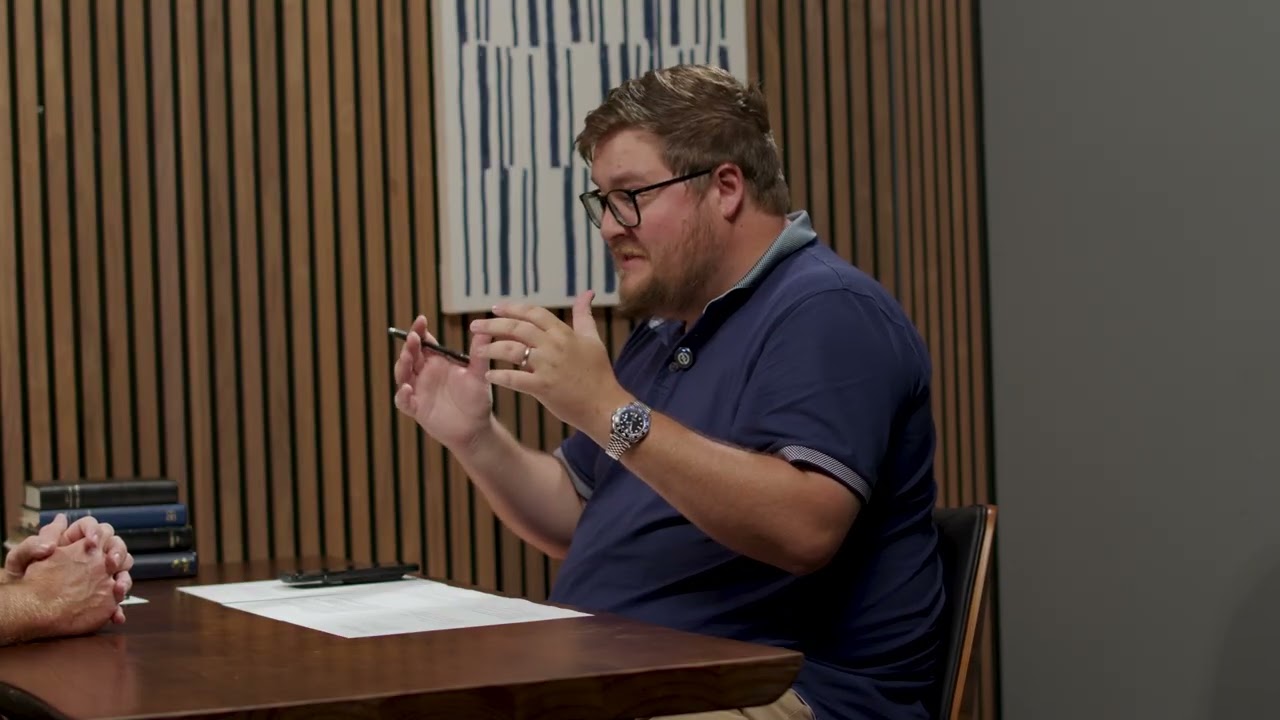
Recruiting, placing, and keeping church volunteers — without begging from the stage. 49 minutes with full chapter-by-chapter session notes.
 ▶
▶+ full session notes with every chapter
Get the free webinar
Instant access — every chapter and the full session notes. No card, no catch.

“If you’re a pastor, you need to know about PastorCenter.”
Josh Howerton · Lead Pastor, Lakepointe Church